

Business budget vs cash flow forecast: what's the difference?
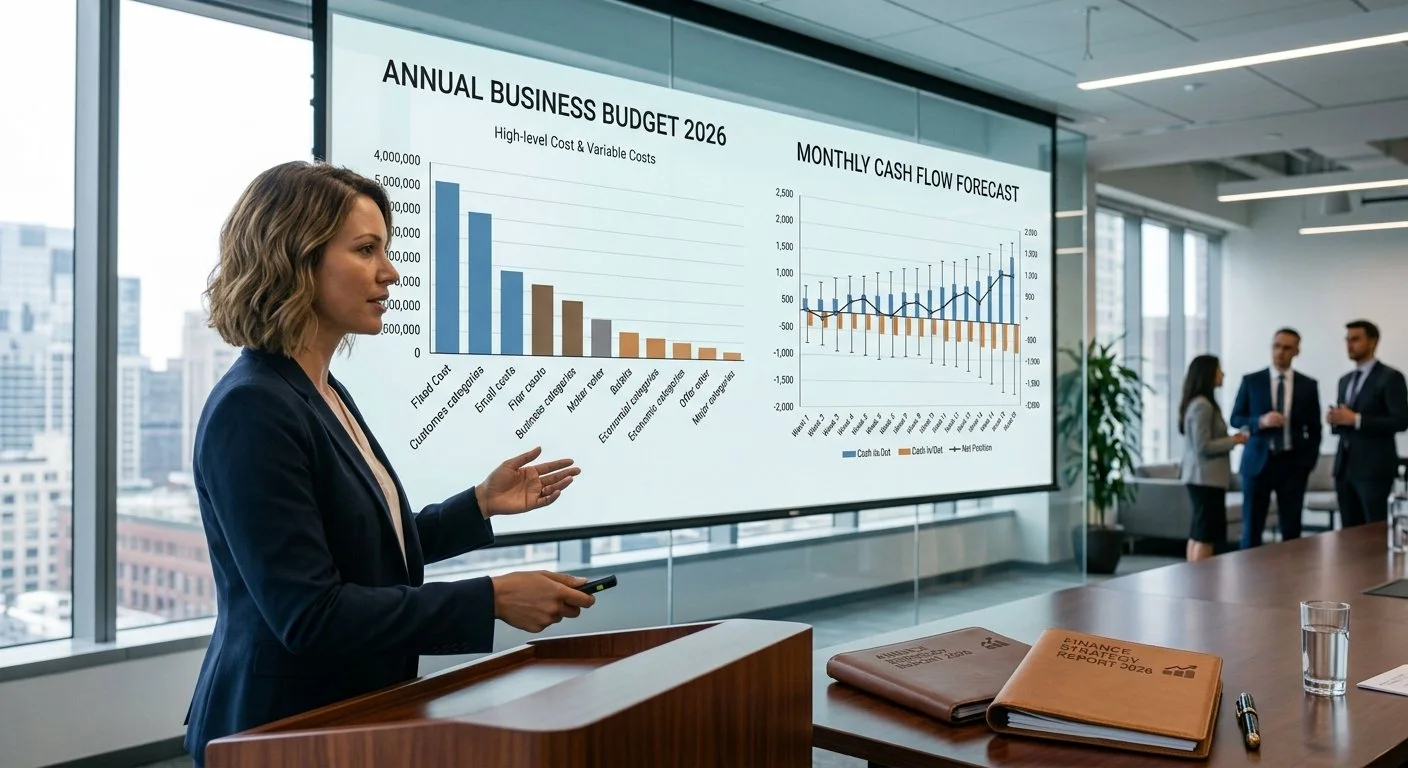
Many business owners use the terms budget and cash flow forecast interchangeably.
They are related, but they serve different purposes.
A budget helps you establish where you want your business to go financially. A cash flow forecast helps you understand whether you are likely to have enough cash available to get there.
Understanding the difference can help New Zealand business owners make better financial decisions.
What is a business budget?
A business budget is a financial plan for a future period.
It typically estimates:
Sales
Revenue
Cost of goods sold
Operating expenses
Wages
Overheads
Expected profit
A budget provides a target.
For example, you might set an annual revenue target of $2 million and establish an expected net profit target based on your planned expenses.
The budget gives you something to measure actual performance against.
What is a cash flow forecast?
A cash flow forecast looks at the timing of cash movements.
It considers:
Cash coming in
and
Cash going out.
This means it focuses on when customers are expected to pay and when the business expects to make payments.
This is particularly important for businesses that provide services on credit, carry significant inventory or have long payment cycles.
Why the two can produce very different results
Imagine your business makes a $100,000 sale in January.
You record the revenue, but the customer has 60-day payment terms.
Your budget may recognise the sale as January revenue.
Your cash flow forecast, however, may show the actual cash arriving in March.
That distinction matters.
Your business may look profitable while your bank account remains under pressure.
A budget helps answer "Are we profitable?"
A budget helps you establish expectations around profitability.
For example:
Revenue: $1,500,000
Direct costs: $600,000
Operating expenses: $650,000
Expected profit: $250,000
These numbers provide a useful framework.
But they don't necessarily tell you when cash will be available.
A cash flow forecast helps answer "Can we pay our bills?"
Cash flow forecasting provides a different perspective.
It helps you estimate whether sufficient cash will be available to cover upcoming obligations.
This is especially important when you have:
Large supplier invoices
Seasonal revenue
Significant tax obligations
Equipment purchases
Loan repayments
Long customer payment terms
Rapid growth
A growing business can actually experience greater cash pressure because it may need to spend money before receiving payment from customers.
Why fast growth can create cash flow problems
Growth is usually considered positive.
However, growth can consume cash.
Suppose you win several major contracts.
You may need to:
Purchase materials
Hire additional staff
Increase inventory
Pay subcontractors
Invest in equipment
Increase marketing
Expand premises
The additional revenue may eventually generate strong profits, but there can be a significant delay before the cash arrives.
This is why growth should be financially planned.
Use both tools together
The best approach is not to choose between budgeting and cash flow forecasting.
Use both.
Your budget can establish your financial goals.
Your cash flow forecast can help determine whether those goals are financially achievable.
Together, they provide a more complete picture of the business.
Compare actual results with your budget
Creating a budget is only the beginning.
You should regularly compare actual results against your budget.
For example:
Area Budget Actual Difference
Revenue $150,000 $135,000 -$15,000
Wages $40,000 $43,000 +$3,000
Marketing $10,000 $7,000 -$3,000
Operating expenses. $30,000 $32,000 +$2,000
The purpose isn't simply to identify whether you are over or under budget.
The real question is:
Why?
Understanding the reason behind the difference can help you make better decisions.
Don't let your budget sit in a spreadsheet
One of the biggest mistakes businesses make is creating a budget once a year and then forgetting about it.
Your budget should be a living management tool.
Review it regularly and update your assumptions when circumstances change.
If sales expectations have changed, costs have increased or you are planning a major investment, your financial plan should reflect the new reality.
Better financial planning leads to better decisions
Budgeting and cash flow forecasting are not only accounting exercises.
They are management tools.
They can help business owners determine when to invest, when to hold back, when to hire and when to seek professional advice.
At Affinity Accounting & Advisory Limited, we help business owners look beyond the numbers and understand what those numbers mean for their future.
If you want greater visibility over your business finances, talk to our team about budgeting and cash flow forecasting.
What our clients say
“Dylan is one of the best accountants I've worked with. He makes a point of explaining things as plainly as possible to those of us who don't understand accounting speak. He has a solid knowledge of best practices in the industry, but most importantly he will always recommend what is most suitable for your specific business. I will continue to recommend Dylan and Affinity Accounting to my clients when they are looking for an accountant.”
-Jay Brooker