

Should you lease or buy business equipment? A financial comparison
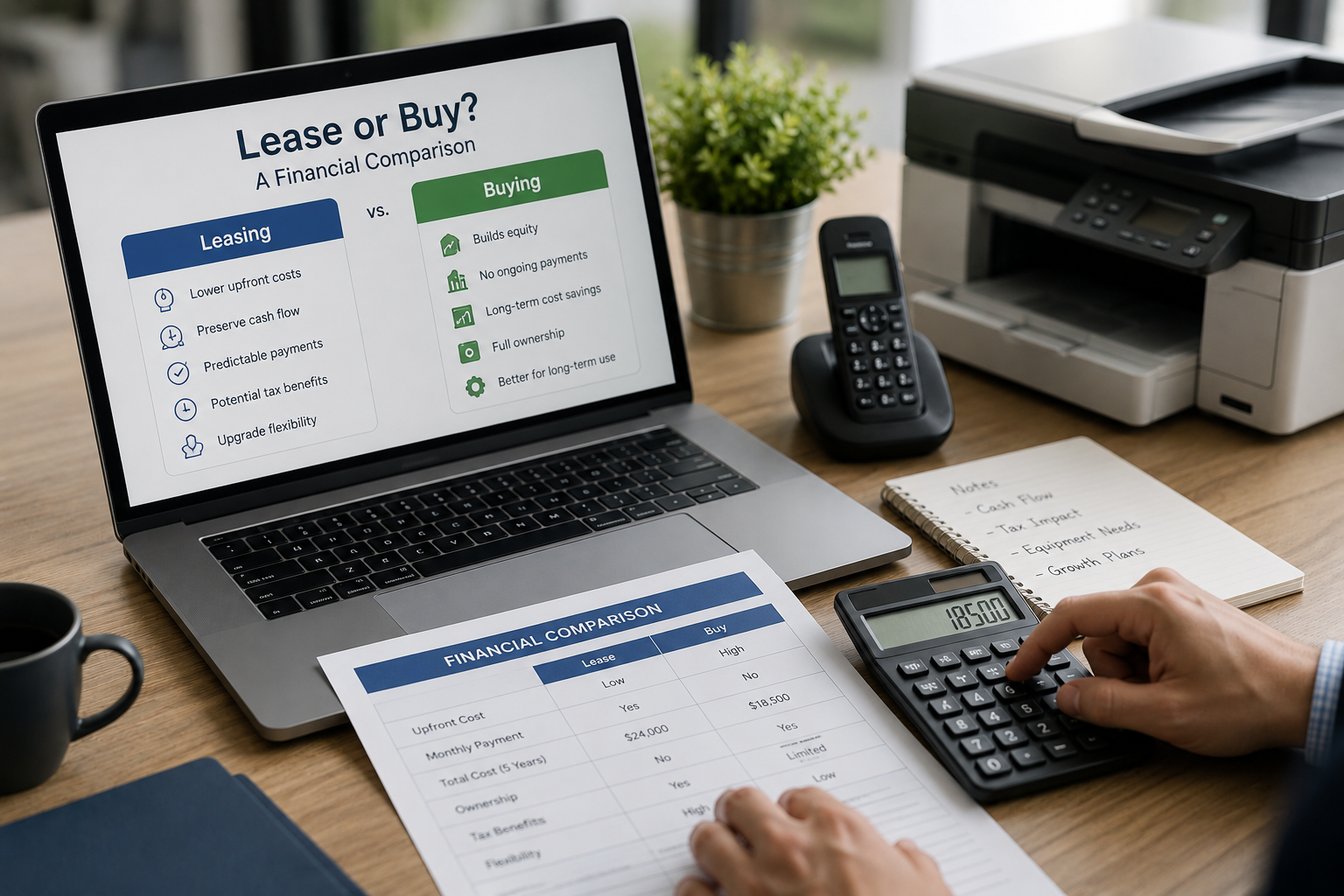
Whether you're upgrading machinery, replacing office technology, purchasing company vehicles, or investing in specialised equipment, one question inevitably arises:
Should you lease or buy?
There is no one-size-fits-all answer. The right decision depends on your business's financial position, cash flow, growth plans, and how the equipment will be used over time.
For many New Zealand businesses, equipment purchases represent some of the largest investments they'll make. Choosing the wrong financing option can place unnecessary pressure on cash flow, increase operating costs, or limit future business opportunities. On the other hand, selecting the right option can improve financial flexibility, preserve working capital, and support long-term growth.
At Affinity Accounting & Advisory Limited, we help business owners evaluate major financial decisions from a strategic perspective. In this guide, we'll compare leasing and buying business equipment, explain the advantages and disadvantages of each approach, and highlight the factors every business owner should consider before making an investment.
Why Equipment Decisions Matter
Business equipment is essential for productivity, efficiency, and growth.
Depending on your industry, equipment may include:
Construction machinery
Manufacturing equipment
Commercial vehicles
Medical equipment
IT hardware
Office furniture
Point-of-sale systems
Commercial kitchen equipment
Warehouse machinery
Printers and photocopiers
While the equipment itself helps generate income, how you finance it can significantly affect your business's cash flow and profitability.
Understanding the Difference Between Leasing and Buying
Before comparing the financial implications, it's important to understand what each option means.
Buying Equipment
When you purchase equipment, your business becomes the owner of the asset.
You can either:
Pay the full purchase price upfront, or
Finance the purchase through a business loan or equipment finance agreement.
Ownership gives your business complete control over the equipment and allows you to use it for as long as it remains productive.
Leasing Equipment
Leasing involves paying regular instalments to use equipment for an agreed period without immediately owning it.
Depending on the lease arrangement, you may:
Return the equipment at the end of the lease
Upgrade to newer equipment
Purchase the equipment for an agreed residual value
Enter into a new lease
Leasing is often popular for technology and equipment that becomes outdated relatively quickly.
The Advantages of Buying Equipment
You Own the Asset
Ownership provides long-term value.
Once finance is repaid—or if the purchase is made outright—the equipment becomes a business asset that can continue generating income without ongoing lease payments.
For businesses planning to use equipment for many years, ownership often provides greater overall value.
Lower Long-Term Cost
Although purchasing usually requires a larger upfront investment, buying can be less expensive over the equipment's lifetime.
Once the asset has been paid for, your ongoing costs are generally limited to maintenance and repairs.
Businesses intending to keep equipment for extended periods often find purchasing more economical than continuously leasing.
Greater Flexibility
Owning equipment gives you complete control over how it's used.
You can:
Modify equipment
Customise it for your business
Use it without mileage or usage restrictions
Sell it whenever appropriate
There are no lease conditions limiting how the equipment is operated.
Potential Tax Benefits
Purchased business assets may qualify for depreciation deductions, allowing businesses to claim a portion of the asset's value over its useful life, subject to New Zealand tax rules.
The specific tax treatment depends on the type of asset and your business circumstances, so it's always advisable to seek professional accounting advice before making significant purchases.
The Advantages of Leasing Equipment
Improved Cash Flow
One of the biggest advantages of leasing is preserving cash.
Rather than paying a large upfront amount, businesses spread payments over time through manageable monthly instalments.
This leaves more working capital available for:
Hiring staff
Marketing
Inventory
Business expansion
Unexpected expenses
For growing businesses, maintaining healthy cash flow is often more valuable than immediate ownership.
Easier Budgeting
Lease payments are usually fixed throughout the agreement.
Predictable monthly expenses make budgeting simpler and improve financial planning.
Businesses can accurately forecast operating costs without large capital outlays disrupting cash flow.
Access to Newer Technology
Technology changes rapidly.
Businesses using leased computers, servers, medical equipment, or specialised machinery often have the opportunity to upgrade to newer models at the end of the lease term.
This helps businesses remain competitive without continually purchasing new equipment.
Reduced Obsolescence Risk
Certain equipment loses value quickly due to technological advances.
Leasing reduces the risk of owning equipment that becomes outdated before it has fully depreciated.
Potential Disadvantages of Buying
Buying isn't always the best financial decision.
Some challenges include:
Significant Upfront Investment
Purchasing expensive equipment can reduce available cash reserves.
This may affect your ability to invest elsewhere in the business.
Maintenance Costs
Once warranties expire, maintenance and repair costs become your responsibility.
These expenses should be factored into the total cost of ownership.
Depreciation
Most equipment decreases in value over time.
If technology changes rapidly, the resale value may be considerably lower than expected.
Potential Disadvantages of Leasing
Leasing also has limitations.
Higher Overall Cost
Over several years, total lease payments may exceed the purchase price of the equipment.
Businesses effectively pay for financing and flexibility.
No Immediate Ownership
At the end of many lease agreements, your business may not automatically own the equipment.
Depending on the contract, additional payments may be required to purchase the asset.
Contract Commitments
Lease agreements often include fixed terms.
Ending a lease early may involve additional costs or penalties.
Questions to Ask Before Deciding
Every business should evaluate its circumstances before making a decision.
Consider the following questions:
How long will you use the equipment?
If the equipment will remain useful for many years, purchasing may provide better long-term value.
If technology changes quickly, leasing may offer greater flexibility.
How important is cash flow?
If preserving cash is essential, leasing may reduce financial pressure by spreading costs over time.
Businesses with strong cash reserves may prefer purchasing outright.
Will the equipment generate immediate revenue?
Revenue-generating equipment may justify purchasing because it directly contributes to business growth.
However, businesses should ensure expected returns comfortably exceed financing costs.
How quickly does the equipment become outdated?
Technology, medical equipment, and IT infrastructure often evolve rapidly.
Construction machinery and manufacturing equipment generally have much longer useful lives.
What are your growth plans?
Businesses expecting significant expansion may prioritise financial flexibility.
Leasing can preserve working capital for future investment opportunities.
Consider the Total Cost of Ownership
Many business owners focus only on purchase price or monthly lease payments.
Instead, evaluate the total cost of ownership, including:
Purchase or lease payments
Interest charges
Maintenance
Insurance
Depreciation
Operating costs
Residual value
Upgrade requirements
Looking beyond the initial cost often leads to better financial decisions.
How Equipment Decisions Affect Cash Flow
Cash flow remains one of the most important considerations.
Purchasing equipment outright may reduce available cash significantly, potentially affecting:
Payroll
Supplier payments
Inventory purchases
Marketing investment
Business expansion
Leasing may preserve liquidity but increase long-term financing costs.
This is why cash flow forecasting should be part of every major investment decision.
The Importance of Professional Financial Advice
Choosing between leasing and buying involves more than comparing monthly payments.
Business owners should also consider:
Tax implications
Cash flow forecasts
Financing options
Business growth objectives
Return on investment
Long-term profitability
Professional financial advice helps ensure equipment investments support your broader business strategy rather than creating unnecessary financial pressure.
How Affinity Accounting & Advisory Limited Can Help
Major equipment purchases represent significant financial commitments, and making the right decision requires careful planning.
At Affinity Accounting & Advisory Limited, we help New Zealand businesses evaluate investment decisions with confidence by providing practical financial advice tailored to their unique circumstances.
Our team can assist with:
Cash flow forecasting
Business budgeting
Financial modelling
Investment analysis
Tax planning
Business advisory services
Whether you're purchasing your first commercial vehicle or investing in new production equipment, we'll help you understand the financial implications before you commit.
Final Thoughts
There is no universal answer to whether leasing or buying business equipment is the better option.
For some businesses, ownership delivers long-term value and lower overall costs. For others, leasing provides the flexibility and cash flow needed to support continued growth.
The right decision depends on your business's financial position, operational requirements, and future plans.
Rather than focusing solely on the purchase price or monthly repayments, consider how each option aligns with your long-term business goals and financial strategy.
Planning an Equipment Investment?
If you're considering leasing or purchasing business equipment and want to understand the financial impact before making a decision, Affinity Accounting & Advisory Limited is here to help.
Our experienced advisers can help you evaluate financing options, forecast cash flow, assess tax implications, and make informed investment decisions that support the long-term success of your business.
Contact Affinity Accounting & Advisory Limited today and let us help you invest in your business with confidence.
What our clients say
“Dylan is one of the best accountants I've worked with. He makes a point of explaining things as plainly as possible to those of us who don't understand accounting speak. He has a solid knowledge of best practices in the industry, but most importantly he will always recommend what is most suitable for your specific business. I will continue to recommend Dylan and Affinity Accounting to my clients when they are looking for an accountant.”
-Jay Brooker