

Cash flow forecasting for New Zealand SMEs: how to predict problems before they happen
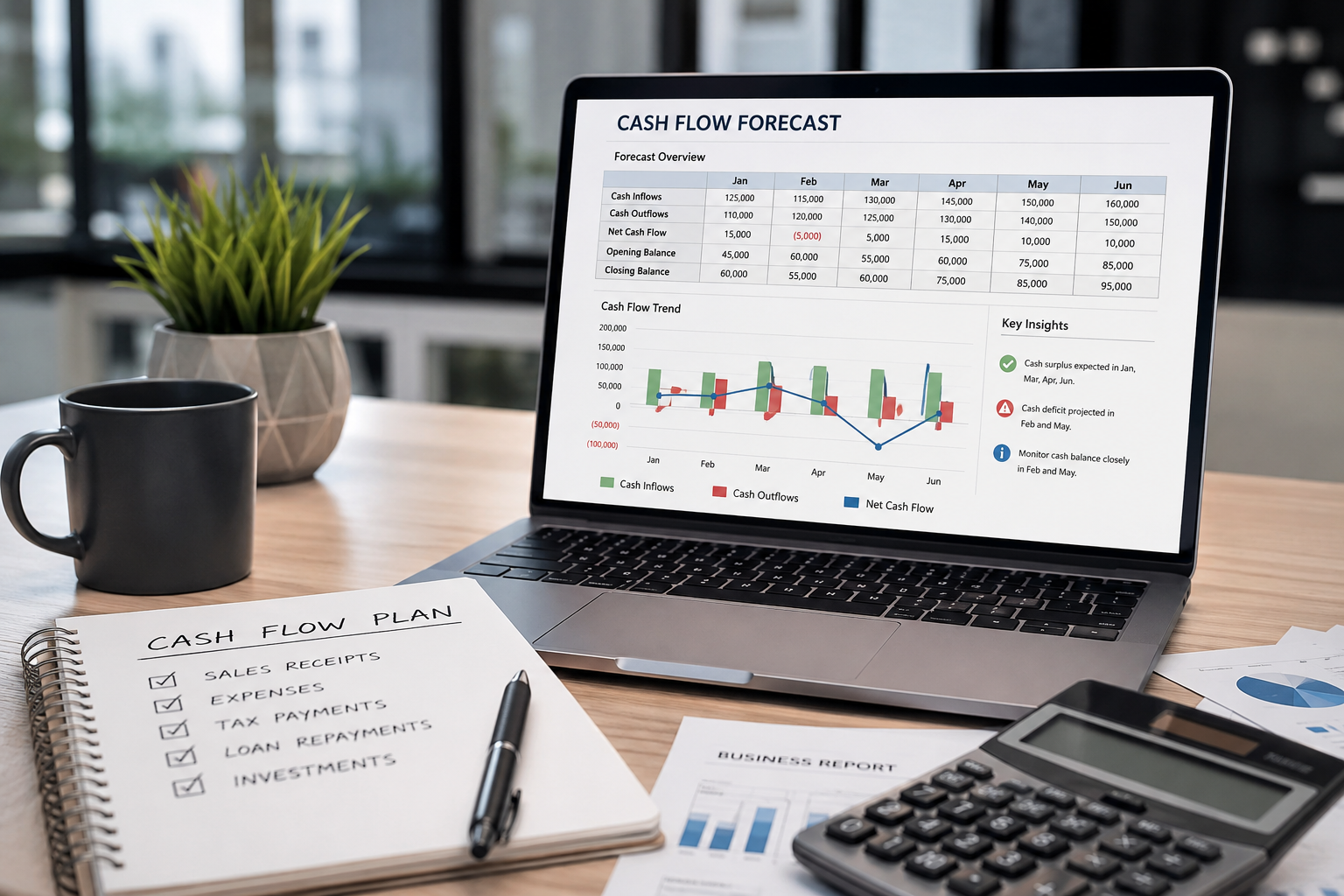
For many small and medium-sized businesses across New Zealand, profitability isn't always the biggest challenge—cash flow is.
It's entirely possible for a business to be profitable on paper while struggling to pay suppliers, meet payroll, or invest in growth. In fact, cash flow issues remain one of the leading reasons businesses experience financial stress, regardless of industry.
The good news is that many cash flow problems are predictable.
By implementing effective cash flow forecasting, business owners can identify potential shortfalls well before they become critical, giving them time to make informed decisions rather than reacting to financial emergencies.
At Affinity Accounting & Advisory Limited, we work alongside New Zealand business owners to transform financial information into practical business intelligence. Cash flow forecasting is one of the most valuable advisory tools available, helping businesses gain confidence, reduce uncertainty, and plan for sustainable growth.
What Is Cash Flow Forecasting?
Cash flow forecasting is the process of estimating how much money will flow into and out of your business over a future period.
Unlike your Profit and Loss Statement, which measures profitability, a cash flow forecast focuses on the movement of actual cash.
A forecast typically includes:
Customer payments expected
Supplier payments
Payroll costs
GST and tax obligations
Loan repayments
Equipment purchases
Rent and operating expenses
Seasonal income fluctuations
The objective is straightforward: understand whether you'll have sufficient cash available to meet your obligations while supporting future business activities.
Why Profit Doesn't Always Mean Positive Cash Flow
This is one of the most common misconceptions among business owners.
Imagine your business completes a $120,000 project in June.
Your financial statements may show the income immediately, but if your customer doesn't pay until August, you still need enough cash to cover wages, suppliers, GST, and operating expenses during those two months.
Without adequate cash reserves or planning, a profitable business can quickly find itself under financial pressure.
Cash flow forecasting bridges this gap by showing when money actually moves, rather than simply when income is recognised.
Why Cash Flow Forecasting Matters for New Zealand SMEs
Every business experiences fluctuations.
Seasonal demand, customer payment delays, unexpected expenses, and economic conditions all influence cash availability.
A well-maintained forecast helps business owners:
Identify cash shortages before they occur
Make informed hiring decisions
Plan equipment purchases confidently
Prepare for GST and tax payments
Improve discussions with lenders
Reduce financial stress
Support sustainable growth
Instead of asking, "Can we afford this today?" you begin asking, "Will we still be financially healthy three months from now?"
That shift in thinking often separates proactive businesses from reactive ones.
Common Warning Signs of Future Cash Flow Problems
Many businesses don't experience cash flow issues overnight.
Small warning signs usually appear months in advance.
Some of the most common indicators include:
Increasing Debtor Days
If customers are taking longer to pay invoices, your incoming cash begins slowing.
Even profitable businesses can experience shortages if debtor collections become inconsistent.
Growing Supplier Balances
Delaying supplier payments may temporarily improve cash, but it often creates larger problems later through overdue accounts, strained supplier relationships, or loss of favourable payment terms.
Declining Bank Balance
If your bank balance consistently decreases each month despite healthy sales, it's worth investigating where cash is being consumed.
Regular Use of Overdraft Facilities
An overdraft can be an excellent short-term financing tool.
However, relying on it every month may indicate an underlying cash flow issue that requires attention.
Large Upcoming Tax Obligations
GST, PAYE, and income tax payments should never come as surprises.
Forecasting ensures these obligations are incorporated into future cash requirements.
The Benefits of Looking Ahead
Cash flow forecasting isn't about predicting the future perfectly.
It's about reducing uncertainty.
A forecast allows business owners to ask valuable questions:
What happens if sales slow next quarter?
Can we afford another employee?
Is now the right time to purchase new equipment?
Will our seasonal slowdown affect payroll?
Can we comfortably invest in marketing?
Rather than relying on instinct, decisions become supported by financial evidence.
How to Build a Cash Flow Forecast
An effective forecast doesn't need to be overly complicated.
Most successful forecasts include four key components.
1. Forecast Income
Estimate expected customer payments rather than invoice dates.
Consider:
Existing contracts
Recurring customers
Seasonal demand
Historical payment behaviour
Being realistic is far more valuable than being optimistic.
2. Forecast Expenses
Include every regular outgoing payment, such as:
Rent
Utilities
Insurance
Wages
ACC levies
Loan repayments
Software subscriptions
Marketing costs
Vehicle expenses
Don't overlook annual expenses that may only occur once each year.
3. Include Tax Obligations
GST and income tax often represent some of the largest cash outflows for SMEs.
Including these obligations months in advance prevents unpleasant surprises.
4. Review Regularly
Cash flow forecasting isn't a one-time exercise.
Businesses should update forecasts monthly—or even weekly during periods of rapid growth or uncertainty.
As circumstances change, your forecast should evolve too.
Common Cash Flow Mistakes Business Owners Make
Many financial challenges arise not from poor performance, but from poor planning.
Some of the most common mistakes include:
Focusing Only on Bank Balance
A healthy bank balance today doesn't necessarily mean your business will have sufficient cash next month.
Upcoming tax payments or supplier invoices can quickly change the picture.
Assuming Every Invoice Will Be Paid Immediately
Customer payment delays are normal.
Forecasts should reflect realistic payment behaviour rather than ideal scenarios.
Growing Too Quickly
Rapid expansion often increases expenses before additional revenue is received.
Hiring staff, purchasing equipment, or expanding premises all require cash.
Growth without planning can actually increase financial pressure.
Ignoring Seasonal Trends
Many New Zealand businesses experience predictable peaks and quieter periods.
Forecasting allows businesses to prepare well in advance rather than reacting once sales decline.
How Technology Makes Forecasting Easier
Modern cloud accounting software has transformed financial planning.
Solutions such as Xero provide real-time financial information that enables businesses to build more accurate forecasts.
Combined with management reporting and professional advisory support, business owners gain greater visibility into:
Cash availability
Outstanding invoices
Upcoming expenses
Business performance
Financial trends
Technology provides the data.
Expert advice turns that data into better business decisions.
Cash Flow Forecasting Supports Better Business Decisions
Forecasting isn't simply about avoiding financial problems.
It also creates opportunities.
Businesses with strong cash flow visibility are better positioned to:
Invest in new equipment
Expand operations
Recruit additional staff
Negotiate supplier agreements
Apply for business finance
Enter new markets
Increase marketing investment
When business owners understand future cash availability, they can make decisions with greater confidence.
The Value of Professional Financial Advice
Many business owners only speak with their accountant at year-end.
By then, opportunities to improve financial performance may already have passed.
Working with an accounting adviser throughout the year allows businesses to:
Monitor financial performance regularly
Update cash flow forecasts
Identify emerging risks
Improve profitability
Plan future investments
Make informed strategic decisions
Accounting should support business growth—not simply satisfy compliance requirements.
How Affinity Accounting & Advisory Limited Can Help
At Affinity Accounting & Advisory Limited, we believe accounting is about more than preparing annual financial statements.
Our advisory approach helps New Zealand businesses gain greater clarity over their finances, understand future opportunities, and make confident business decisions.
Whether you're experiencing rapid growth, navigating uncertain economic conditions, or simply wanting better visibility over your business finances, cash flow forecasting can provide valuable insights that support long-term success.
Our team works closely with business owners to develop practical financial strategies that align with their goals while helping minimise unexpected financial challenges.
Final Thoughts
Cash flow problems rarely appear without warning.
The signs are often visible months in advance—if you know where to look.
Cash flow forecasting provides business owners with the confidence to anticipate challenges, seize opportunities, and make smarter financial decisions before problems arise.
Rather than reacting to financial pressure, forecasting empowers you to stay one step ahead.
If you'd like to gain greater control over your business finances and make more informed decisions, the team at Affinity Accounting & Advisory Limited is here to help.
Ready to Plan with Confidence?
Whether you're looking to improve cash flow, strengthen financial performance, or develop a reliable forecasting process, Affinity Accounting & Advisory Limited can help you build a stronger financial future for your business.
Contact our team today to discuss how proactive accounting advice and cash flow forecasting can help your business stay resilient, profitable, and prepared for whatever comes next.
What our clients say
“Dylan is one of the best accountants I've worked with. He makes a point of explaining things as plainly as possible to those of us who don't understand accounting speak. He has a solid knowledge of best practices in the industry, but most importantly he will always recommend what is most suitable for your specific business. I will continue to recommend Dylan and Affinity Accounting to my clients when they are looking for an accountant.”
-Jay Brooker